
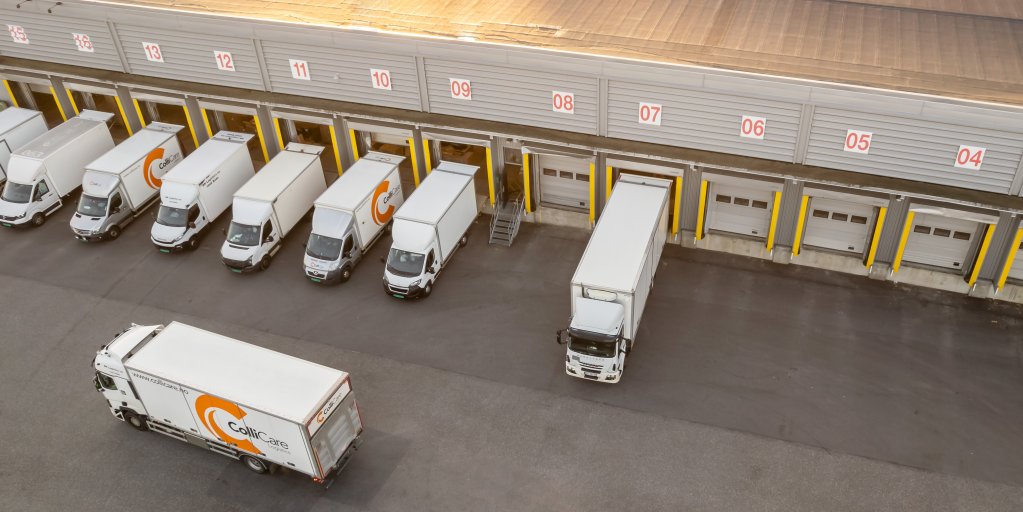
In practice, this question often goes beyond transport alone and includes warehousing, inventory management, and broader 3PL (third-party logistics) services.
There is no universal answer. Both models can work well and both come with limitations. The right choice usually depends on scale, complexity, and how much flexibility a business needs at a given moment.
In‑house logistics: strengths and limitations
Advantages
In-house logistics teams are embedded in the organisation, working closely with planning, production and customers. This can support:
- direct control over priorities and day‑to‑day decisions
- deep knowledge of internal processes and products
- quick alignment with sales, production and finance
For stable flows, limited geography or highly customised operations, in‑house logistics can be a strong solution.
When it can become challenging
As volumes grow or operations expand across regions, in-house logistics can become resource-intensive. This applies not only to transport but also to warehousing and inventory handling. Common challenges include:
- scaling capacity during peak periods
- recruiting and retaining qualified warehouse and logistics staff
- investing in and maintaining suitable warehouse facilities
- building and maintaining local knowledge in multiple countries
- dependency on a small number of individuals or teams
- slower adaptation to new markets or changing regulations
What works well at one stage may require significant investment to support growth.
Working with a logistics partner: strengths and considerations
Advantages
A logistics partner can support both transport and warehousing/3PL services, depending on business needs. This includes not only moving goods but also physically outsourcing storage, handling, and distribution operations.
Working with a logistics service provider can offer:
- access to established transport networks and local expertise in different countries
- professional warehouse operations without the need to invest in facilities or staff
- flexibility to scale storage capacity up or down in line with demand
- reduced complexity related to staffing, facility management, and daily operations
- knowledge of local regulations and market conditions
- broader market visibility and carrier networks
- experience handling disruptions, peaks, and operational complexity
When outsourcing warehousing, companies also gain access to digital tools that provide transparency and control. Through WMS (warehouse management system) systems such as NYCE, customers can:
- monitor real-time stock levels
- track all warehouse activities
- maintain a full overview of goods stored
- generate reports and access the data they need
This type of solution is used across ColliCare Logistics’ warehousing operations, ensuring that even when operations are outsourced, visibility and control over inventory remain high.
Access to professional logistics expertise also allows companies to focus on their core business, while reducing the need to keep up with changes in regulations and market conditions. For businesses with variable volumes or growth ambitions, this can significantly reduce operational pressure and risk.
Things to consider
A common misconception is that in-house logistics equals control, while working with a partner means losing it. In practice, strategic ownership typically remains with the company, while execution is supported by external expertise.
Many organisations therefore combine both approaches:
- keeping strategic planning, customer relationships, and key decisions internally
- outsourcing execution such as transport and/or warehousing to specialised partners
This hybrid model allows businesses to maintain control while benefiting from flexibility, scalability, and professional execution.
Clear roles, expectations, and communication are essential. Without this, challenges may arise, such as limited transparency, dependency on external processes, or misalignment of responsibilities.
Ultimately, the question is less about who owns logistics, and more about where capability adds the most value.
The takeaway
Choosing between in-house logistics and a logistics partner is not about right or wrong models, but about understanding how your business operates today.
For some companies, outsourcing transport is enough. For others, extending this to warehousing and 3PL services unlocks additional value through flexibility, scalability, and reduced operational complexity.
As businesses expand and operate across markets, the focus often shifts from ownership to capability – deciding which expertise needs to stay close internally, and which is best supported through external, local experience.
Finding this balance is what allows logistics to grow alongside the business.