


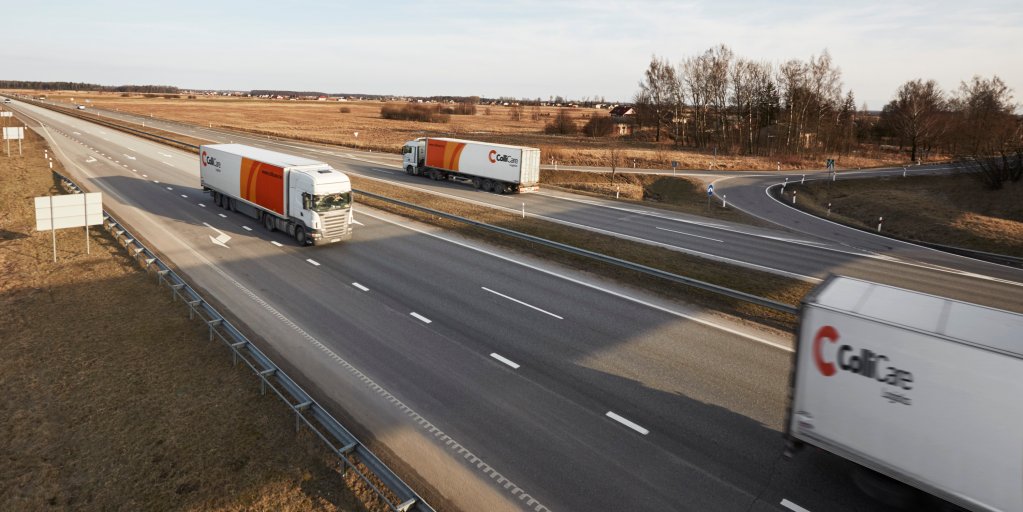
The main change is the calculation method. Currently, road taxes are based on a fixed period (daily, weekly, monthly, or yearly). Under the new system, road tolls will be calculated based on the actual kilometres driven on toll roads.
The new road toll will depend on:
- Distance driven on toll roads.
- Vehicle weight and number of axles.
- EURO emission class and CO₂ classification.
- Applicable road toll rates.
According to the Lithuanian Ministry of Transport, the government expects to collect approximately EUR 110 million in 2027, around 60% more than under the current system. The main reason for this change are to increase funding for road maintenance and infrastructure, introducing a system based on actual road usage and align with EU regulations.
Example - Klaipèda-Vilnius-Klaipèda (600 km)
Under the current Lithuanian vignette system, a EURO V truck pays EUR 14 per day or EUR 911 per year.
Assuming approximately 228 operating days per year, an annual vignette represents a cost of around EUR 4 per operating day.
This means that a truck can complete the 600 km Klaipèda-Vilnius-Klaipèda round trip with a road toll cost of approximately EUR 4 when using an annual vignette.
Under the planned Via Toll system, we estimate that the same route could cost approximately EUR 83, depending on the vehicle classification and the actual distance driven on toll roads.
Estimated road toll increase:
| Comparison | Current cost | Estimated 2027 cost | Increase |
| Daily vignette | EUR 14 | EUR 83 | +493% (5.9 times) |
| Annual vignette (per operating day) | EUR 4 | EUR 83 | +1,975 (20.8 times) |
This represents a potential 6-21-fold increase in road toll costs for this specific route, depending on how the current vignette cost is allocated.
Expected Impact on ColliCare Transport Costs
The actual cost increase will vary depending on the routes, transport distances, vehicle types and truck utilisation.
An important difference is that under the current system, one vignette can cover multiple trips during its validity period. Under the new system, every kilometre driven on toll roads will be charged.
Based on our preliminary calculations for January-October 2026 transport volumes, the average road toll could increase from approximately EUR 5-11 to EUR 37 per trip.
However, EUR 37 is only an estimated average, not a fixed charge. The actual cost will depend on the transport routes and volumes in 2027.
This change will have a significant impact on domestic transport costs, including supplier pickups, deliveries to Klaipèda port and other road transport operations.
For our 2027 budget and pricing calculations, we should consider the additional cost compared to the current road toll, rather than treating the full new toll as an additional expense.
Conclusion
The introduction of Via Toll represents a major change in the Lithuanian road transport cost structure.
Although the government expects total road toll revenue to increase by approximately 60%, the impact on individual transport operations could be significantly higher, especially for trucks currently using annual vignettes efficiently.
Our calculations indicate that road toll expenses could increase several times on certain routes. Therefore, this change needs to be considered when reviewing transport costs and freight rates for 2027.
All calculations remains preliminary until the final applicable tariffs, toll road distances and actual 2027 transport volumes are confirmed.
Official source:
Lithuanian Ministry of Transport, 12 November 2026: